


Your request is accepted,
we will contact you soon
 Author of the article
Irina, expert of the project
Published: 03.07.2025
Views: 5 350
Views: 5 350
Petrovsky Passage is one of the most famous shopping centers in Russia and an architectural landmark from the early 20th century. Built right at the heart of the city, it quickly became a notable place for trade and social life since its inception. This article delves into the history, architectural features, cultural significance, and contemporary role of Petrovsky Passage.
Architectural features of Petrovsky Passage
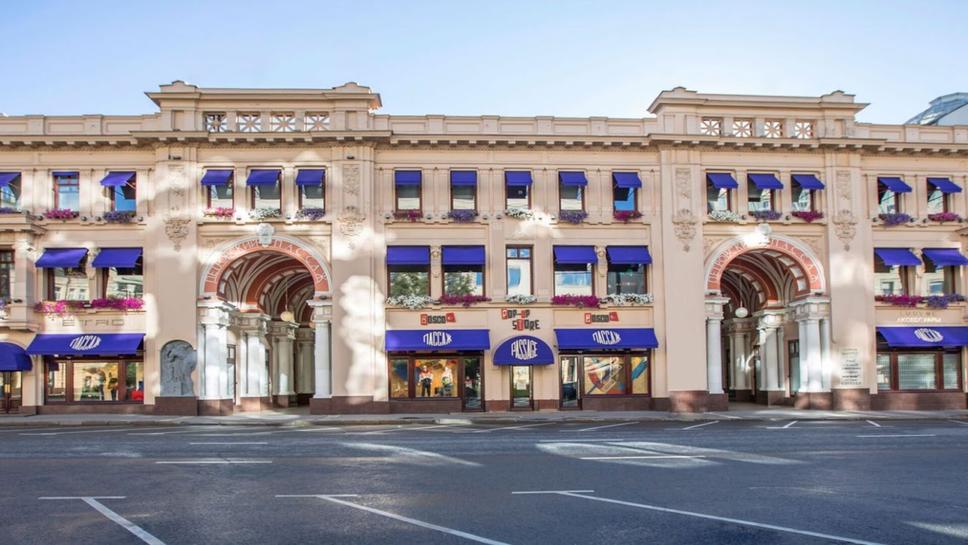
The architectural design of the building was developed by Boris Freidenberg and Sergei Kalugin: they planned the interior space so that the shopping pavilions were arranged in tiers and connected by a common passageway. The four-story arcade occupies an entire block and has a passageway connecting two streets: Petrovka and Neglinnaya.
The ceilings of the shopping arcades were constructed under the supervision of engineer Vladimir Shukhov, who used technologies that were advanced for their time. Shukhov designed wide glass semi-cylindrical arches, which not only provided natural lighting but also minimized the load on the walls.
The facade on the Petrovka side is decorated with a bas-relief entitled “The Worker,” created in 1921 by sculptor Matvey Manizer. Today, it is a separate cultural heritage monument.
The History of Petrovsky Passage
How the passage was built
The property on Petrovka Street, with its shops and residential premises, belonged to the Firsanov merchant family since the 1870s. By the beginning of the 20th century, the old estate no longer met the requirements of a modern city and trade. Then Vera Firsanova decided to build a covered shopping mall with rows of shops located on both sides of a wide passage. The total cost of the project exceeded 1.5 million rubles, and the entrepreneur had to sell two plots of land to finance it.
Construction took three years, and in 1906, the grand opening of the Firsanovsky Passage took place. More than 50 stores offering fashionable goods of the time were concentrated under its arches, and from 1910, the Bristol restaurant and coffee shop operated in the basement.
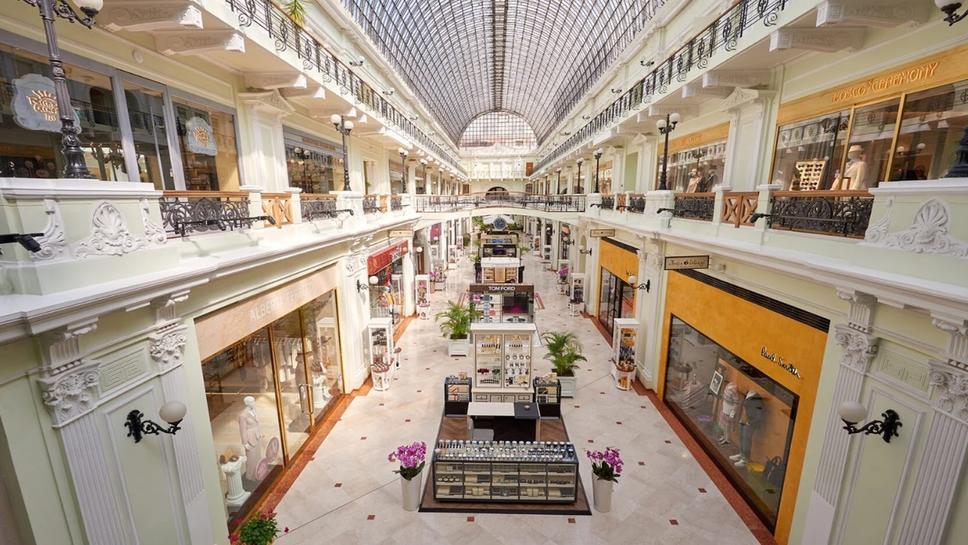
The glass arches of Petrovsky Passage
Petrovsky Passage as a fashion center
In the pre-revolutionary passage, there were shops such as Veselkov and Tashin, which sold fabrics for women's dresses, Markushevich and Grigoriev, which sold silk and wool fabrics, while underwear and ties could be bought at Louis Kreitzer, and corsets and umbrellas at Vikula Morozov, Konshin and Sons and Matilda Barish. Later, the French store Gomon opened in the arcade, selling photographic supplies and film equipment.
Petrovsky Passage in Soviet times
After the 1917 revolution, the passage was nationalized and renamed Petrovsky after the street on which it is located. In subsequent years, the building ceased to be commercial: it housed the VSNKh industrial exhibition, as well as a factory for sewing underwear for the Red Army. In the 1930s, the second line of the passage housed Dirizhablestroy, led by Umberto Nobile. In addition, auctions were held here, at which selected noble property was sold off.
During the Great Patriotic War, the third floor of the Petrovsky Passage was used to house residents who had lost their homes as a result of bombing: communal apartments were only resettled by the 1960s. In the post-war period, part of the premises was occupied by proletarian clubs, and the Kino-Petrovka cinema also operated here. In the 1960s, Petrovsky Passage became a branch of the Central Universal Store (TSUM), and trade resumed here. A major renovation of the building was carried out in the 1990s by the well-known Turkish construction company ENKA.
Role in art
Petrovsky Passage became a place that inspired many classic writers. Ilya Ilf and Yevgeny Petrov described in "The Twelve Chairs" the auction hall where Ostap Bender and Kisa Vorobyaninov tried to buy valuable chairs. And Mayakovsky, in his poem “Stabilization of Life,” conveyed the atmosphere of the passage through the image of a worker enthusiastically reading an advertisement for fashionable clothing:
"Throwing down her sunflower seeds in delight,
raising her eyebrows enthusiastically,
the worker reads:
'Ready-made blouses.
The latest craze on Petrovka."
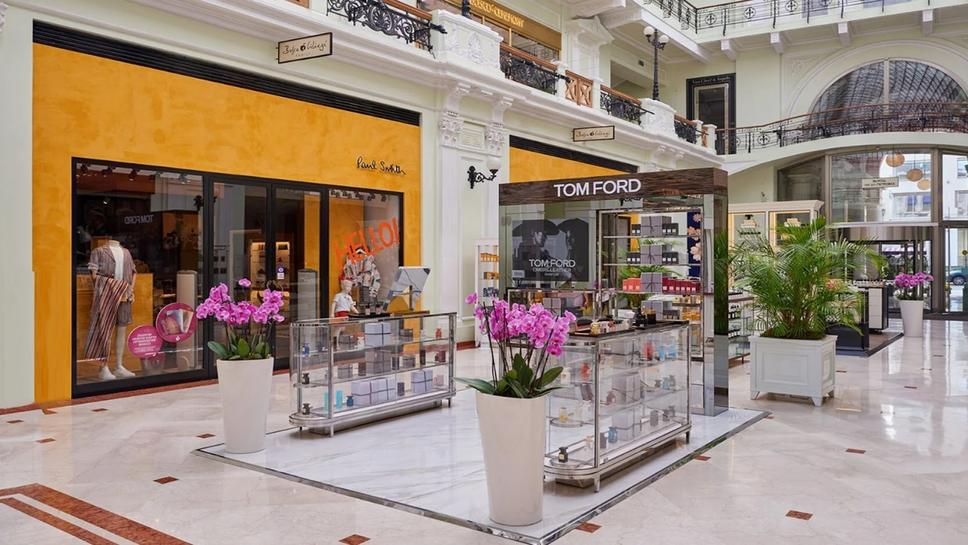
A wide passage between rows of shops with boutiques
Petrovsky Passage today
Petrovsky Passage regularly hosts a variety of events: the annual Italian design exhibition IDEM La Dolce Vita del Design, a flower fair called “Passage in Flowers,” a New Year's fair, and grand openings of new boutiques.
The shopping arcade houses stores from brands such as Max Mara, Alberta Ferretti, Antonio Marras, SportMax, ETRO, and Moschino. You can find children's clothing and toys at BoscoBambino, and home goods at BoscoCasa. In addition to stores, the passage also has a pharmacy, dry cleaner, jewelry workshop, and other convenient services.
Conclusion
Petrovsky Passage is not just a prestigious shopping complex, but also an important part of Moscow's history and architecture. If you want to buy a mansion in Moscow, request a callback using the form below: a personal manager will select lots based on your request.