


Your request is accepted,
we will contact you soon
 Author of the article
Irina, expert of the project
Published: 20.05.2025
Views: 8 285
Views: 8 285
Today, we are seeing growing demand for historic estates in Moscow and the Moscow region. Some people are looking for a family residence, while others are looking for premises for a country hotel. In this article, we examine the legal nuances of purchasing such real estate, the cost of estates in Moscow, and the main trends for 2025 in the mansion market.
Who buys estates and why?
Trends of 2025
Today, buyers are increasingly looking for mansions to use as private galleries, company headquarters, and family residences. For many, such houses are an excellent alternative to a country cottage. The optimal floor space is 500 to 1,500 m² with high ceilings and an open floor plan. And the main criterion is the availability of private land where you can plant an orchard, build guest pavilions, or set up a children's playground.
Currently, buyers are particularly interested in abandoned country estates. The most sought-after locations are the areas closest to Moscow, such as Barvikha and Zvenigorod.
What estates are for sale
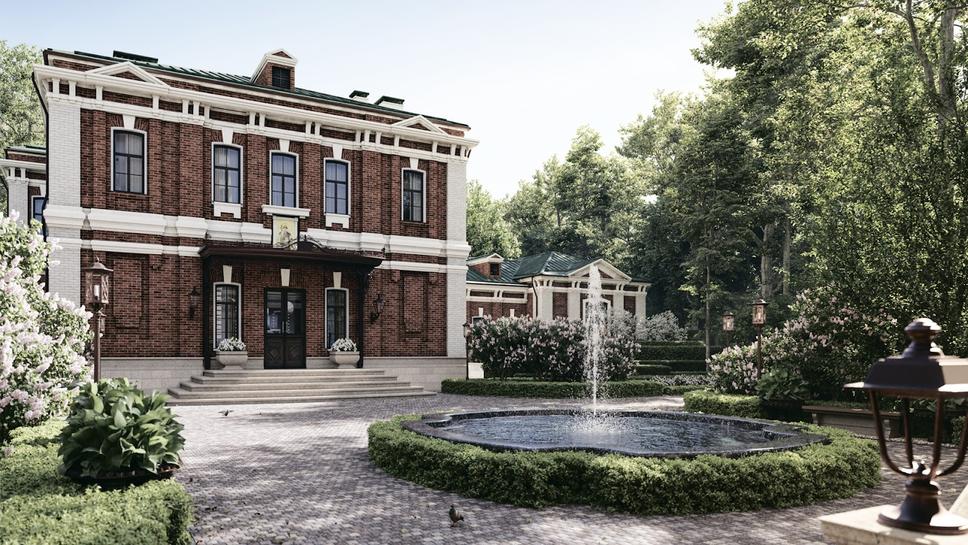
Estate in Talitsy
The estate in Talitsy appeared in the second half of the 19th century, commissioned by the local owners of the village, the Aigins. This is where it got its name. Even before the abolition of serfdom, the Aigin merchants bought their freedom from the landowner. After the 1861 reform, they opened brick and sawmill factories. On the site of the inn, they built residential and farm buildings, a smithy, and a large park. In the last century, the estate complex was used by the Talitsy eight-year school.
Now there is a picturesque park area with a pond next to the house. The complex of buildings includes the main house, a wing, and a carriage house. The two-story main house is connected to the carriage house by an underground passage. The carriage house gallery is an ideal location for events and exhibitions. The houses in the complex have preserved their historic parquet flooring, the walls are painted or decorated with textiles, and the stucco decor, tiled stoves, and wood-burning fireplaces have been recreated. In front of the main house and the wing, the cobblestone pavement has been restored and now serves as a parking lot. The total area is 2,136 m².
In 2014, the estate was completely restored and returned to its historical appearance. It is a 25-minute drive to the Moscow Ring Road. There is convenient access to Yaroslavskoye Shosse.
Entrance to the main house of the estate in Talitsy
Estate in the village of Taraskovo
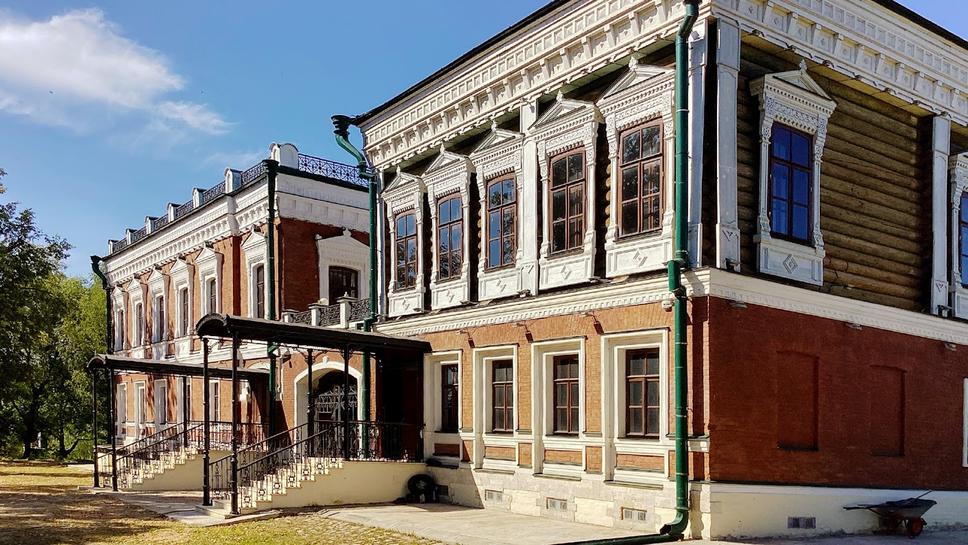
This historic mansion, built in 1750, is located in the village of Taraskovo in the Naro-Fominsk district of the Moscow region. The house is surrounded by a park, the Kazan Church, and a small pond.
The Taraskovo estate was first mentioned in 1760, when it was owned by landowner Anna Khrushcheva. At the turn of the 19th and 20th centuries, the house belonged to the noble Glebov family. They built the two-story house, which has survived to this day, and the kitchen wing. After the revolution, the Taraskovo collective farm operated on the estate. In 1973, the mansion was recognized as a cultural heritage site of regional significance. The total area is 1,010 m².
Thanks to the mixed layout and lack of finishing, you can arrange the space to suit your needs. Restoration work was carried out in 2016, but the mansion requires renovation, including the interiors. The beach on the Oka River is a 20-minute drive away. There are convenient exits to the M-4 highway and Kashirskoye Shosse.
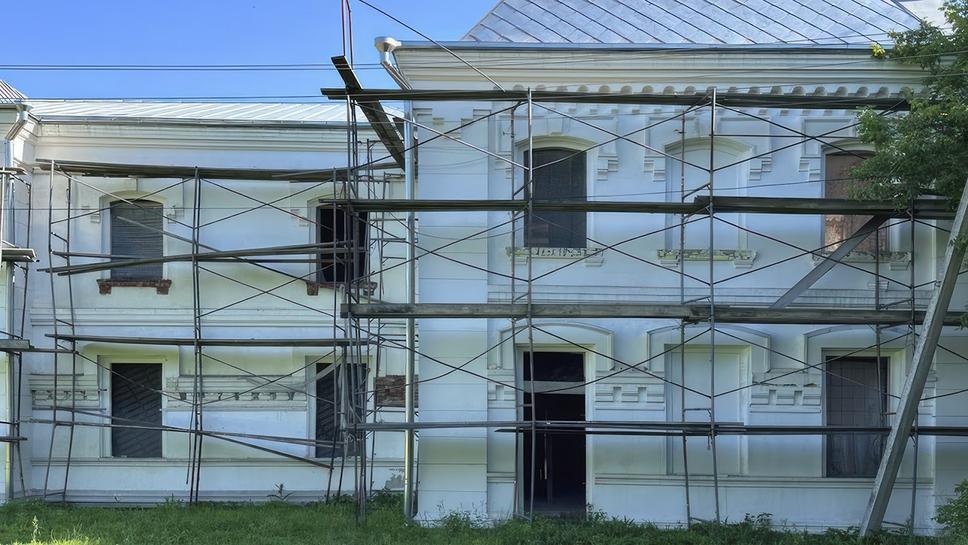
The facade of the main house on the Taraskovo estate
Nikolskoye-Obolyanino Estate
The estate and park were once considered one of the finest examples of landscape architecture in the Moscow region at the turn of the 18th and 19th centuries. The last owners were the Olsufyevs, prominent philanthropists. Leo Tolstoy also lived and worked here at one time. It was on this estate that he worked on the novella The Death of Ivan Ilyich, the short story The Master and the Worker, and the first draft of the novel Resurrection. The owner of the estate, Adam Olsufiev, built a meteorological station on the grounds and invited Dmitri Mendeleev, who was preparing for his first hot air balloon flight here, to visit.
The estate includes a classicist-style main house with a total area of 950 m², an ancient park with a stone staircase leading to the ponds. There are two ponds here: the Upper (“Clean”) and the Lower (“Dirty”). There are also ready-made foundations for park gazebos.
The house is surrounded by the restored St. Nicholas Church and the ski slopes of Dmitrov. The estate is ideal if you are planning to build a private residence, restaurant, or mini-hotel in the countryside.
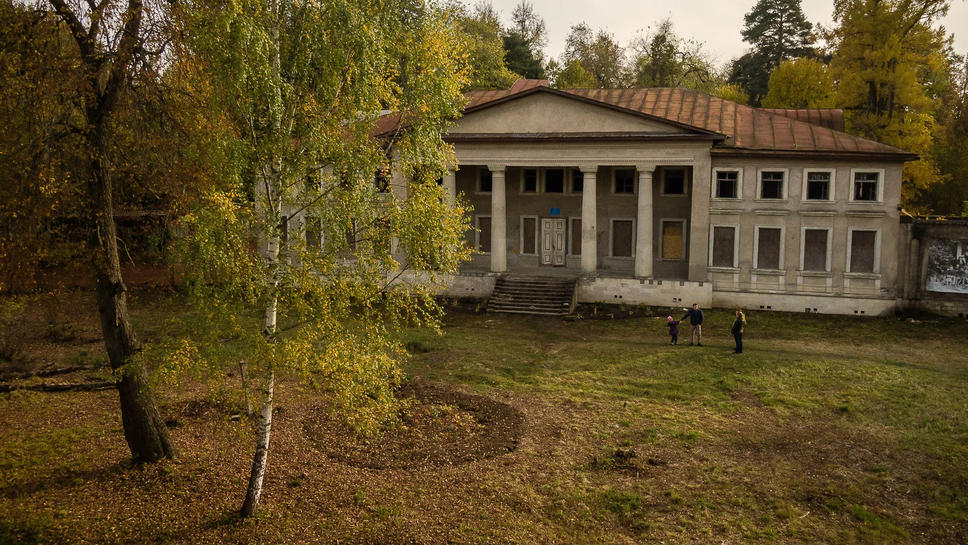
Facade of the main house of the Nikolskoye-Obolyanino estate, photo by Vadim Razumov
Legal complications when purchasing an estate
Who owns the land?
Usually, estates can be owned by:
• Private individuals — descendants of the original owners. There are not many of these in Moscow.
• The municipality. For example, if the estate is abandoned or seized for debts.
• Investors. Such clients often buy buildings for redevelopment.
Legal complications when buying
1. Checking documents
Ask the seller for title documents. These may include a purchase agreement, certificate of inheritance, or commissioning certificate for renovated properties.
If we are talking about historic estates, you need to check the status of the cultural heritage site in the Unified State Register of Real Estate (EGRN). This imposes certain restrictions on renovation work. We will discuss this further below.
Important: Status houses or cultural heritage sites are protected by the law “On Cultural Heritage Sites (Historical and Cultural Monuments) of the Peoples of the Russian Federation.” Each of these objects in Russia has its own passport. It contains information about the type of object, the boundaries of the territory, the objects of protection, as well as the number and date when the decision to enter the object in the register was made.
2. Whose land is it?
Be sure to verify that the land is registered as property. This can be seen in the extract from the Unified State Register of Real Estate.
3. Hidden encumbrances
Request a document confirming that there are no debts for utilities. Also, check the history of the object for any legal disputes.
Historic estates: what you need to know
When purchasing cultural heritage properties, you need to understand that you will inevitably encounter restrictions during restoration. By law, you are required to preserve the appearance of the building, refrain from carrying out work that could potentially worsen its condition, and not change the layout or damage the interior.
Therefore, repainting walls with centuries-old stucco in a trendy color is not possible without permission from the relevant authorities, at the very least. This also applies to replacing windows with plastic ones or installing air conditioning on the facade. In Moscow, even the slightest interventions must be agreed with the Department of Cultural Heritage and KGIOP. Before carrying out the work, you need to prepare project documentation as required by the state authority and organize technical, author, and state supervision of the work.
How to avoid fraud
Here we will give you some universal advice that can be applied to any real estate transaction.
1. Be sure to check and double-check the seller's ownership rights. If they are acting on behalf of someone else, the power of attorney must be notarized.
2. Carefully study the purchase agreement, cadastral passport, and inspection reports. Ideally, invite a lawyer to the transaction.
You can also conduct an independent examination: assess the condition of the foundation and walls. Since many buildings are old, there may be hidden defects and a risk of structural collapse.
The cost of a country estate and hidden expenses
Average prices in Moscow and the Moscow region
The cost of country estates depends heavily on many factors:
• location;
• size;
• condition of the facades and interiors;
• availability of adjacent land and parking;
• purposes for which the building is suitable;
• history of the house;
• and other nuances.
For example, an urban estate in the Meshchansky district with an area of 4,440 m² costs 8 billion rubles. It includes four historic mansions, a landscaped park, and underground parking. It is believed that the houses were built at the end of the 19th century for Count Sergei Orlov-Davydov.
Additional costs
Don't forget about property tax, repair costs, and the cost of maintaining utilities in good working order. There is no exact amount here — it all depends on the condition of the estate, its size, and so on.
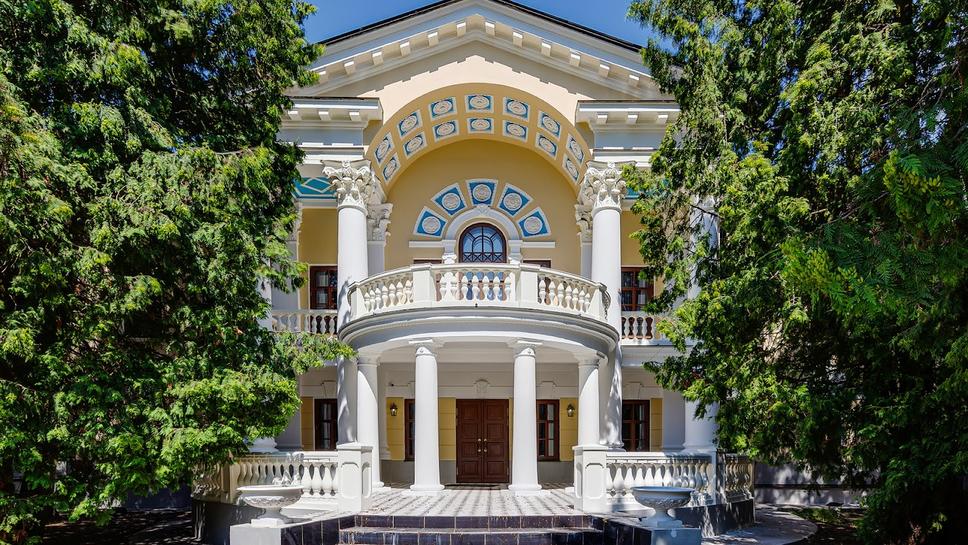
Early 20th century estate in Skolkovo
Restoration of the estate: how to preserve history
Coordination of work
We have prepared a step-by-step plan for obtaining permission to preserve cultural heritage sites:
1. We need to receive an assignment from the Committee for State Control, Use, and Protection of Historical and Cultural Monuments (KGIOP) within 30 working days.
2. Next, a designer licensed by the Ministry of Culture of Russia can begin developing project documentation.
3. Once it is ready, we conduct a state historical and cultural examination of the documentation. This is the responsibility of specialists certified by the Ministry of Culture of Russia.
4. After a positive decision by the historical and cultural examination, we need to obtain approval from the KGIOP for the design work.
5. Only then can KGIOP issue a permit to start work to a contractor licensed by the Ministry of Culture. This usually takes 30 working days.
6. The author's supervision and scientific guidance must provide KGIOP with a scientific report on the work done. This must be done within 90 days of the completion of all work.
7. This report is approved within 30 working days.
8. As soon as the response is received, acceptance procedures and the formalization of the acceptance certificate can be organized.
What is prohibited:
• Changing the number of floors, proportions of the building, color of the facades, and shape of the roof.
• During restoration, original elements must be preserved: stucco moldings, bas-reliefs, historical layout.
Cost of repairs
It all depends on the scale of the repairs, the size of the house, and so on. The project, which must be approved by all authorities, is also important. But you should expect to pay at least ₽600,000 per square meter. It is better to set aside a slightly larger budget in case of unforeseen situations during the repairs.
Step-by-step buying guide
1. Search for a property. It is best to consult with specialists in the luxury real estate market. They will not only find a suitable house or country complex for you, but will also take care of all the legal and bureaucratic aspects.
2. Check the documents. Study all the title documents and check the property for any encumbrances. And don't forget to check the technical condition of the building.
3. Entering into negotiations. If it is an auction or tender, we win at the most favorable price. If the owner is an individual or a legal entity, we agree on comfortable terms of the transaction.
4. Preparing the contract. We draw up all the purchase and sale documents with the participation of a notary. Next, we register the transaction with Rosreestr.
Customer stories
Whitewill broker Albert Karipov shared stories about his latest deals. Spoiler alert: most customers are buying for redevelopment and investment purposes.
For example, a customer from Portugal bought a 6,000 m² house inside the TTK for his retreat center. A yoga and meditation studio will soon open there.
There were several investment deals:
1. A professional player in the mansion market purchased a 3,000 m² house within the Boulevard Ring. He is currently renovating it, then will divide it into several small lots and sell them.
2. A regional investor in the construction industry bought an operating hotel with 85 rooms and an area of 6,000 m². The location is not far from the Garden Ring.
There were also purchases for personal use. A regional entrepreneur bought a 700 m² house opposite the Kremlin. He will be moving there with his family.
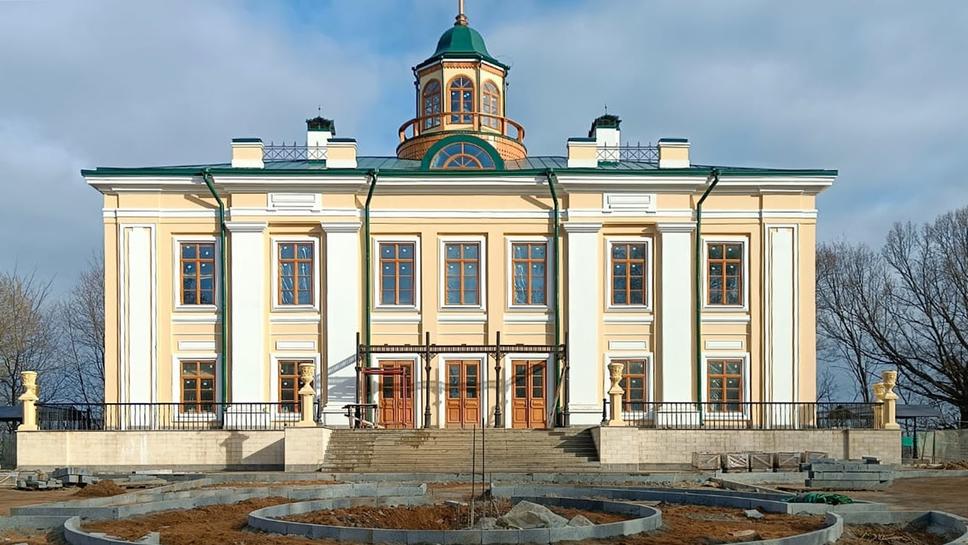
A complex of mansions in the Filevsky Park area, built in the early 19th century. Formerly owned by the Naryshkin family.
Conclusion
Buying a country estate is definitely a very complicated procedure that requires serious involvement in the process and an understanding of the finer points. Whitewill can help you with this. Our brokers can find a country estate for restoration as a family residence, hotel, or corporate headquarters. We will conduct all necessary checks on both the building and the owner. Leave a request for a callback, and Whitewill brokers will contact you promptly.